

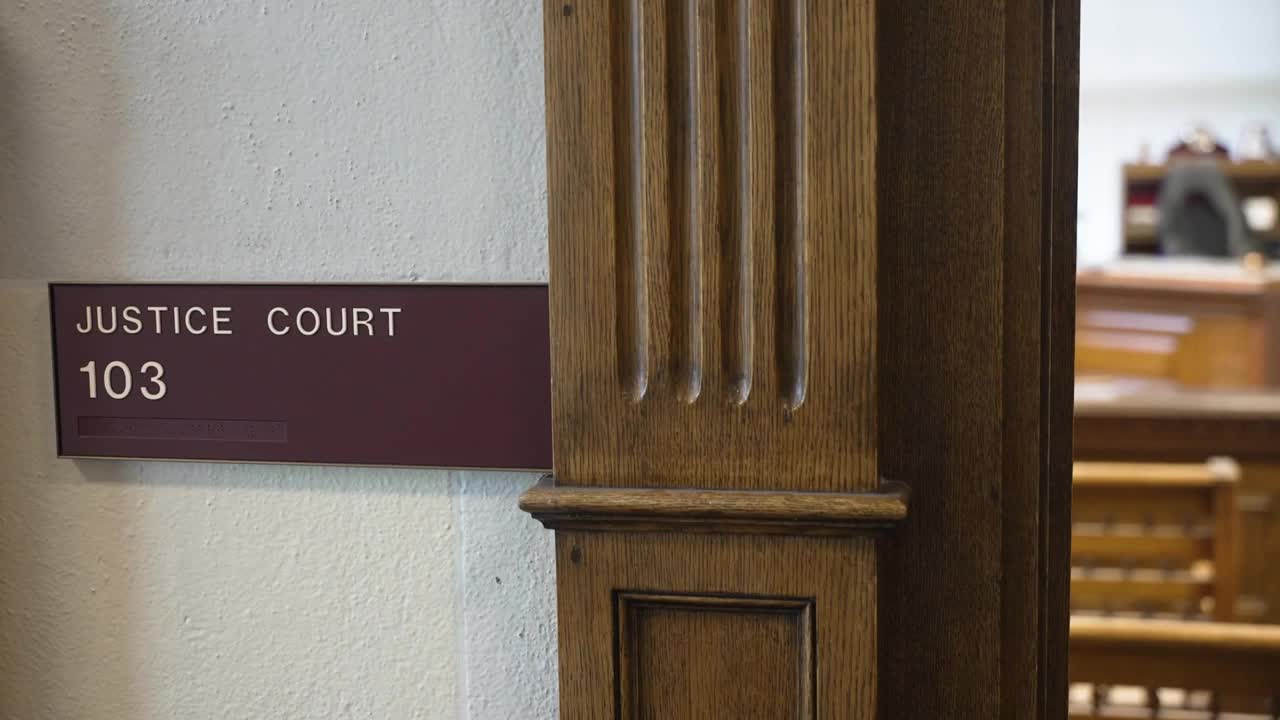


HELENA — When someone is charged with a crime, they have a constitutional right to an attorney, even if they can’t afford one. But for people going through a civil legal matter, like an eviction or an order of protection, that guarantee doesn’t apply. That means it can be difficult and expensive to find an attorney to help – and in many situations, people may have to represent themselves in court.
“When somebody shows up and the process is opaque or confusing to them, it's really difficult to watch them struggle in a system that they just don't understand,” said Hayden Ramsey.
Ramsey is with Montana Legal Services Association, and for about a year, she’s been coordinating a program intended to help close that access gap: Community Justice Workers. CJWs are non-attorney volunteers, who will be trained to assist people with certain legal services in county justice courts and in city courts.
(Watch the video to learn more about Community Justice Workers.)
In an order last month, the Montana Supreme Court unanimously approved a request from MLSA to establish rules for CJWs. Starting in 2027, those rules will allow for trained workers to fill out forms, submit documents and provide basic representation in court for people dealing with housing, debt and protective order cases.
“Courts are intimidating places; they are procedural places,” Ramsey said. “So having a representative who can stand right there beside you receive and hear information, as well as give information on your behalf, help you plan an argument and represent you in your case, can make all the difference in someone really feeling like the outcome of the case was fair and that they had their fair say in the court process.”
The State Bar of Montana, the statewide association of attorneys, is also collaborating on the program. Bar president Rich Batterman says it’s a good fit for Montana.
“A big state with a relatively small population and a particularly small population of legal professionals – and what we end up with are what we call ‘legal deserts,’ areas where legal services just simply aren't available,” he said.
Training for CJWs will be free, and they will provide their services free to the public. Ramsey hopes many of them will be people already working in Montana communities on other types of social services.
“For those exact areas where there is this huge gap in legal services, legal representation, legal information and advice, that community organizations there will want to have their workers go through our programs so that they can help bridge that gap to services,” she said.
MLSA is working on putting together a 14-week training curriculum right now. Ramsey said the first cohorts will be small, to give them a chance to work closely with each prospective CJW. She said the first seven or eight will begin training in January and could be ready to work in court by the spring.
Batterman says the CJWs will be well prepared and closely supervised by attorneys.
“I don't think that the profession and the bar really view it as a competitive situation as much as a backfilling, tailored to meet a need,” he said. “We see that need, and it's a way that our profession can support the service.”
If you’re interested in signing up for information on future training sessions, MLSA has set up an online form here. You can find more on the program overall at the MLSA website.
“It's carefully tailored to meet an essential need, and we hope that the citizens of the state of Montana will realize a wonderful benefit,” said Batterman.
