

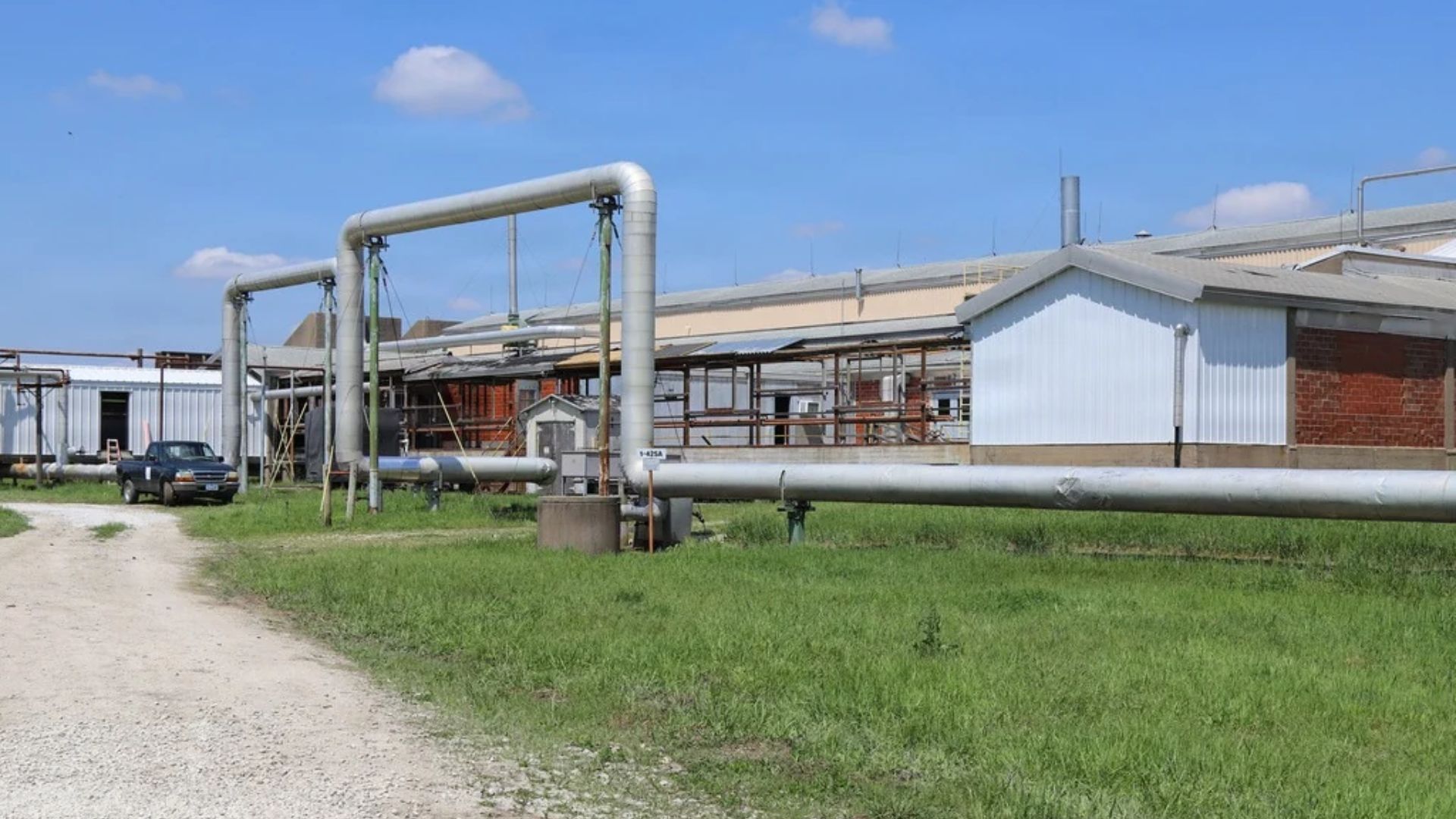


The military is proceeding with a planned detonation of highly sensitive explosive material in Iowa Wednesday morning despite days of legal challenges from environmental groups and concerns from local and state leaders.
“Our number one priority here in Iowa today is the health and safety of the citizens of this region,” acting Army Secretary Adam Telle told reporters during a news conference Tuesday.
Officials say the toxic materials, stored underground at a military facility in Middletown, Iowa, have degraded so significantly over a period of decades that they could potentially explode on their own if they are not disposed of in a controlled manner.
“We have talked to every expert within the federal government and every expert we could find outside the federal government. We’ve taken every viable solution and considered it. We’ve taken every reliable piece of data and analyzed it,” Telle said of his confidence in the plan to detonate five tons of lead azide as early as 9:00 a.m. Wednesday.
Representatives from multiple federal agencies, including HHS, USDA, FEMA, the EPA, and ATF, pledged transparency as they laid out their plans for the explosion and the aftermath.
Wednesday, they said, would have “optimal” weather conditions to carry out the blast.
“Lead azide is a very sensitive, primary explosive. It’s very sensitive to heat, shock, and friction,” said Rob Cekada, the director of the Bureau of Alcohol, Tobacco, Firearms and Explosives. He said the United States began using the explosive nearly a century ago but moved away from using the product about 15 years ago because of its sensitivity and the challenges that have come with maintaining it.
Cekada said the lead azide in Iowa has been monitored and regularly inspected, but in recent months, experts noticed “significant crystallization” on the exterior of its containment barrels. The crystallization, he said, was an indication that the material was even more sensitive and could self-detonate.
“Just removing the lid from one of those containers could cause a detonation of that barrel and a sympathetic detonation of every barrel inside either one of those magazines,” he said.
Cekada said his team consulted with governmental agencies and international manufacturers of explosives to understand the best possible ways to eliminate the lead azide.
“Everyone that we’ve spoken to, through their experience,” he said, “has determined that this is the only safe path forward for not only the surrounding community of Middletown and the surrounding areas, but also the personnel that are tasked with mitigating this threat here on the base.”
Homeowners like Tom Umek have been preparing their homes for days as the scheduled detonation date was initially planned for Friday.
“We’ve already bought masks to wear,” he said.
Umek’s home and many others may be in the path of a plume filled with lead particulates following the blast, so he moved his lawn furniture and his grandchildren’s toys inside his garage and plans to evacuate ahead of the explosion. The military also took soil samples from his yard to compare with samples following the detonation.
“We’re not going to stay here saying, ‘I don’t think anything’s going to happen,’ but on the other hand, nothing may happen. We’re just not going to be here to find out,” he said.
The military also has been updating its predictive maps to show which communities might be most impacted as the winds and weather change ahead of the event. Experts said as many as 350 farms may also be impacted by the plumes that follow the blast.
“The projected plume is ... maybe the worst case scenario,” said Richard Fordyce, an undersecretary at the USDA. “I am confident that we are doing what we need to be doing,’ he said, pledging support to farmers and ranchers who might need assistance.
Multiple government leaders expressed an understanding of the urgent plan Tuesday, including Iowa’s governor.
“As governor, the safety of Iowans near the Iowa Army Ammunition Plant is my top priority,” Gov. Kim Reynolds said. “I take the Army’s warning seriously that the choice is between a planned detonation or an uncontrolled explosion. I believe, based on the information I’ve been given, that the danger is immediate, and I trust the Army will do everything in its power to protect the people who could be affected,” she said.
“I understand the real risks of further delaying this controlled detonation. I support every effort to reduce the risk of lead exposure to the public.," Sen. Joni Ernst said, while also expressing a desire for more transparency.
“I'm in close contact with my Senate colleagues and state leadership to make sure the health and safety of these communities are protected before, during, and after the detonation. I expect clear leadership, real transparency, and accountability, and I will be pressing Army leadership at every level for answers,” she said.
“Iowans expect government to be transparent and trustworthy,” said Sen. Chuck Grassley. “Unfortunately, the situation at the Iowa Army Ammunition Plant has turned into political finger pointing from all sides. Decision makers need to keep their eye on what’s most important—the health and safety of Iowans. This is a life-or-death situation and the government has a responsibility to protect precious American lives.”
