

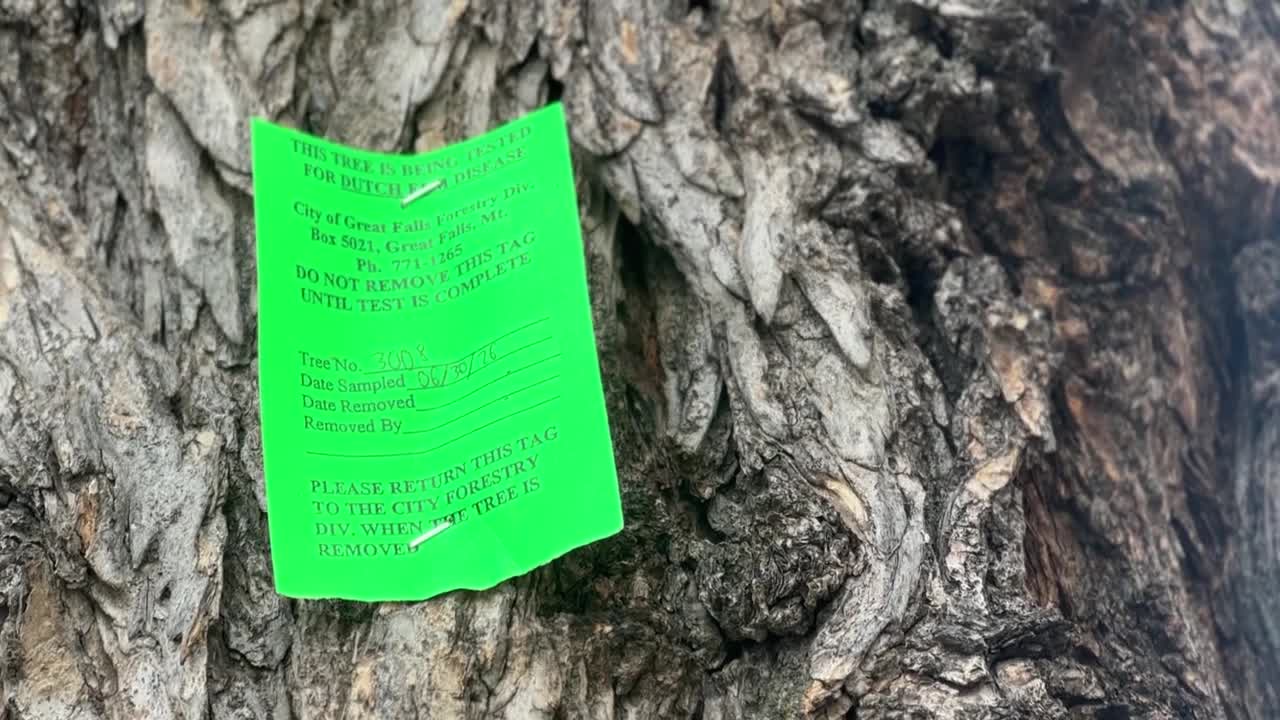


GREAT FALLS — If you have an elm tree in your yard, Great Falls city foresters are asking you to keep a close eye on it this summer.
Dutch elm disease has been present in Great Falls since the late 1980s, and City Forester Todd Seymanski says the city has already lost approximately 15,000 elm trees to the disease. While far fewer American elms remain today, preserving those mature trees remains a priority.
(WATCH: Great Falls foresters ask residents to watch for signs of Dutch elm disease)
This year, foresters are especially concerned after a mild winter and favorable conditions led to an increase in the European elm bark beetle population, which spreads the disease.
"The Dutch elm disease will spread two different ways," Seymanski said. "The most common one is the European elm bark beetle will feed on a diseased tree, pick up the fungus, and then fly over to an undiseased tree and transfer the fungus."
The disease can also spread through interconnected root systems between neighboring elm trees.
Homeowners with elm trees are encouraged to watch for unusual dead branches or sections of the canopy losing leaves. If a tree appears to be infected or has already died, Seymanski says it's important to act quickly.
"If you have some elms in your backyard, just kind of keep an eye on them. Look for flagging, unusual dead spots. Or if you have a dead elm in your backyard, just try to get it removed as soon as possible."
The city has a dedicated Dutch elm disease hotline at 406-791-8990, where residents can report suspected cases. Forestry staff can help identify whether a tree is an elm, inspect it for signs of disease, and, if necessary, collect samples for testing. Removing infected trees quickly also reduces places where beetles can overwinter and spread the disease to healthy trees.
Seymanski says most of Great Falls' remaining elm trees are located within the city's historic boulevard district, making early reporting especially important to help protect the community's iconic tree canopy.
