



HELENA — A week after Montana began implementing new work requirements for its Medicaid expansion program, organizations that work with Medicaid recipients say they’re still worried about what’s going to happen to their clients’ care.
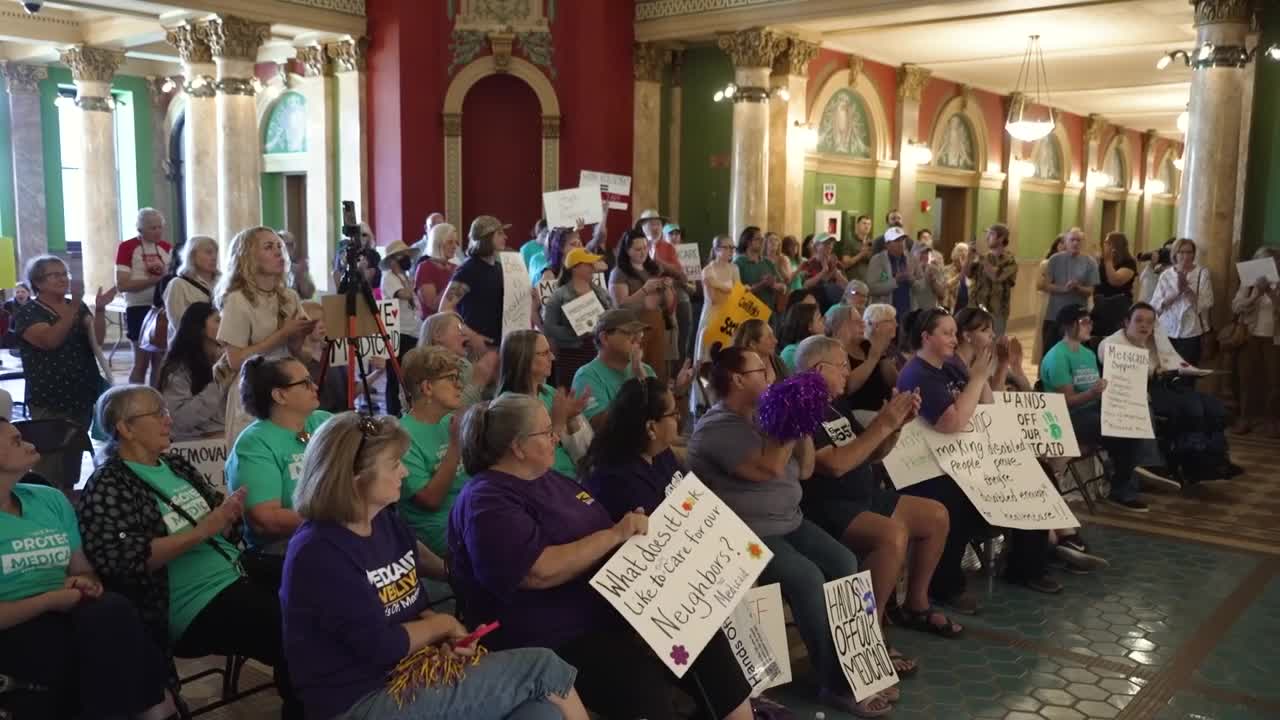
On Wednesday afternoon, advocates gathered in the Montana State Capitol rotunda to rally against the new community engagement requirements, which they argue created unnecessary barriers for Medicaid recipients.
“The people I care for don't need more paperwork, they need healthcare,” said Nic Sun Child, an in-home caregiver from Missoula.
(Watch the video for the latest reaction to the implementation of community engagement requirements.)
Most adults on Medicaid expansion now have to show they’re spending 80 hours a month working or doing other approved activities to remain eligible. Some groups will be exempted, including pregnant women, parents or caregivers of children under 14, American Indians, and people with health conditions that affect their ability to work.
At Wednesday’s rally, organized by the group Catalyst Montana, speakers said most of the people in the Medicaid expansion program are working or should qualify for one of the exceptions. However, they believe even many people who are eligible are going to find it challenging to confirm it.
“We’re forcing people to show proof that they are working to prove their value to an already super slow bureaucracy that can be super painful to navigate – even for someone like me that deals with them every day,” said Carrie Steere, assistance coordinator for Good Samaritan Ministries in Helena.
The federal “One Big Bill,” passed by Republicans in Congress last year, required states to begin implementing community engagement requirements for Medicaid expansion by January 2027. However, Montana – which proposed its own version of those requirements seven years ago – started early.
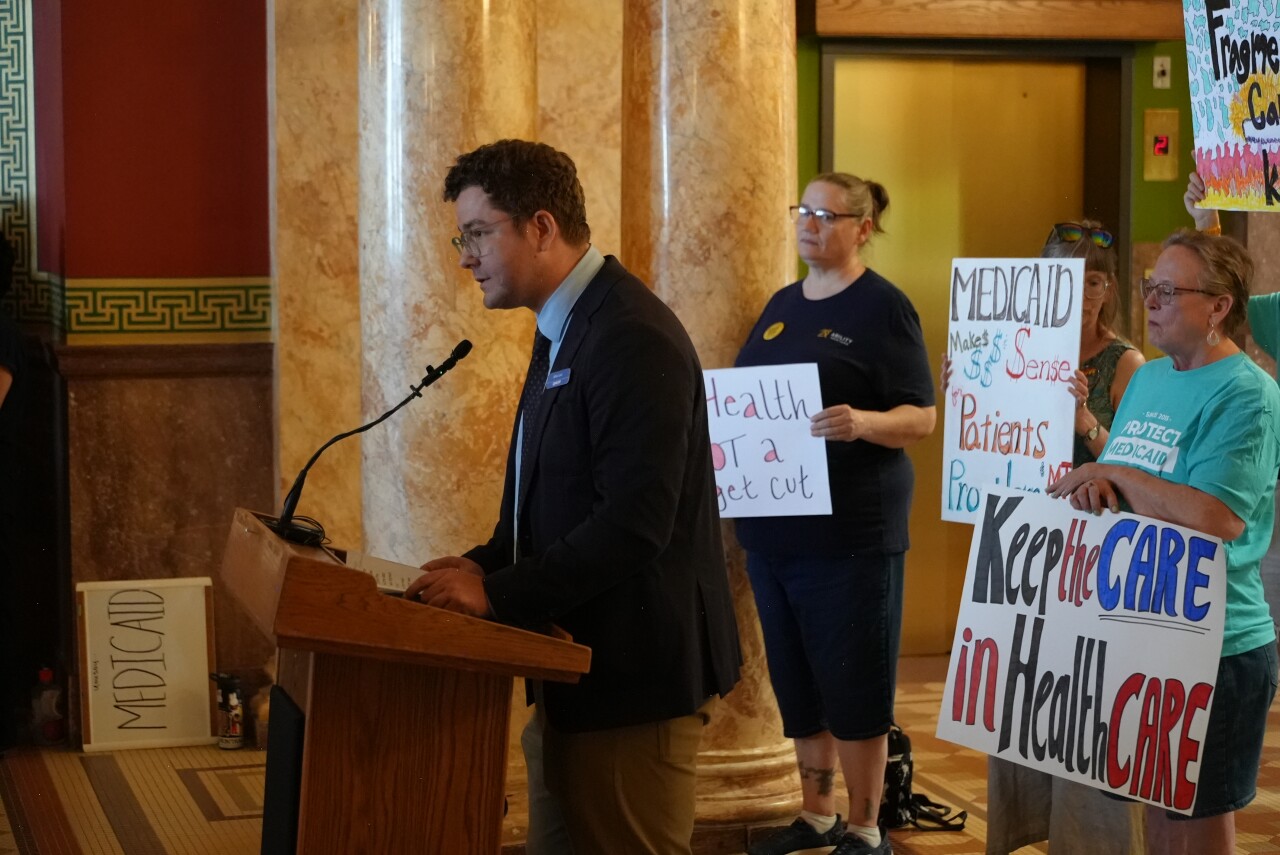
Dillon Sarb, Catalyst Montana’s senior health & economic justice organizer, wants to see the Montana Department of Public Health and Human Services do more to lower the hurdles those applying or reapplying for Medicaid expansion may face. He called on the department to find ways to use data they already have to confirm eligibility whenever possible, and to share data on how implementation is going with stakeholders in the state.
“I want them to be as transparent about this as possible, and to work with Medicaid recipients to make sure that people are not being disenrolled due to procedural reasons – due to paperwork or long wait times or what have you, rather than being deemed ineligible,” said Sarb.
DPHHS leaders gave lawmakers an update about community engagement requirements Wednesday morning, during a hearing of the Legislature’s Children, Families, Health and Human Services Interim Committee. They demonstrated the forms Medicaid members will need to use to confirm eligibility, and they said they’re already working to expand how they can use existing data to recertify a client.
One major area is for Medicaid members seeking an exemption based on health conditions. DPHHS leaders said people will have to demonstrate both the condition they have and how it impacts their ability to work. They’ve already produced a list of about 50 potentially qualifying conditions, and by October, they hope to be able to use the information from current patients’ Medicaid claims when determining whether they still qualify.
Montana is currently in a three-month “hold harmless” period, during which DPHHS will be notifying people who aren’t in compliance with the community engagement requirements but won’t be ending their coverage. Full enforcement will begin Oct. 1.
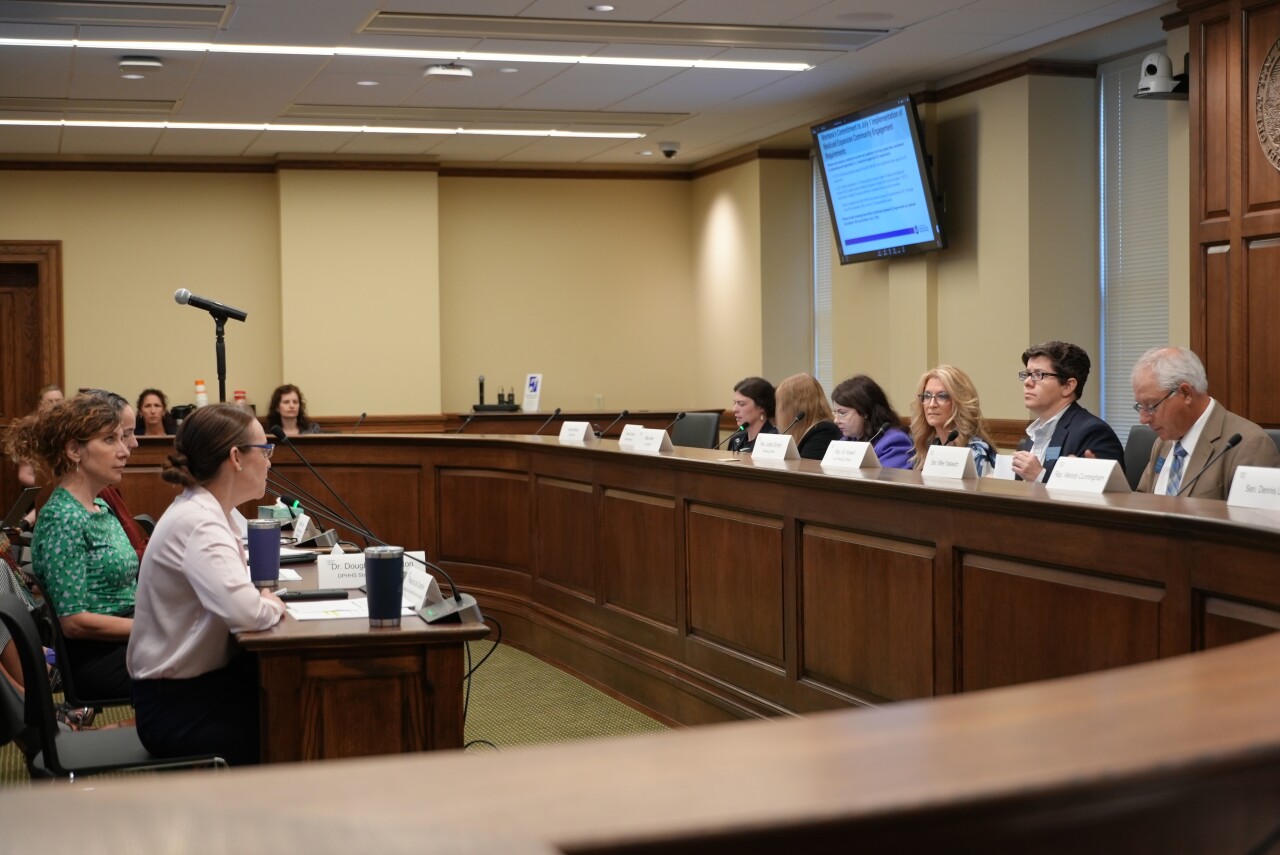
Rebecca de Camara, DPHHS’ Medicaid & health services executive director, told lawmakers Wednesday that the federal Centers for Medicare and Medicaid Studies will be requiring states to collect data on redetermination outcomes and other aspects of the implementation.
“I think that this is reassuring to our community partners, because CMS has a vested interest in helping the state be able to collect accurate and thorough data so that we do have an understanding of how this rollout of community engagement is impacting Montana residents,” she said.
You can find more information about the community engagement requirements and documentation on DPHHS’ “Changes to Medicaid” website.
