


NORTH CENTRAL MONTANA — Across Montana, sheep producers say pressure from imported lamb is making it increasingly difficult to stay profitable, raising concerns about the future of family-run operations and the long-term viability of the state’s sheep industry.
While the United States relies on lamb imports to meet consumer demand, producers and industry experts say the growing share of foreign product, particularly from Australia and New Zealand, has reshaped the market in ways that disadvantage domestic producers.
Madison Collier reports - watch the video here:
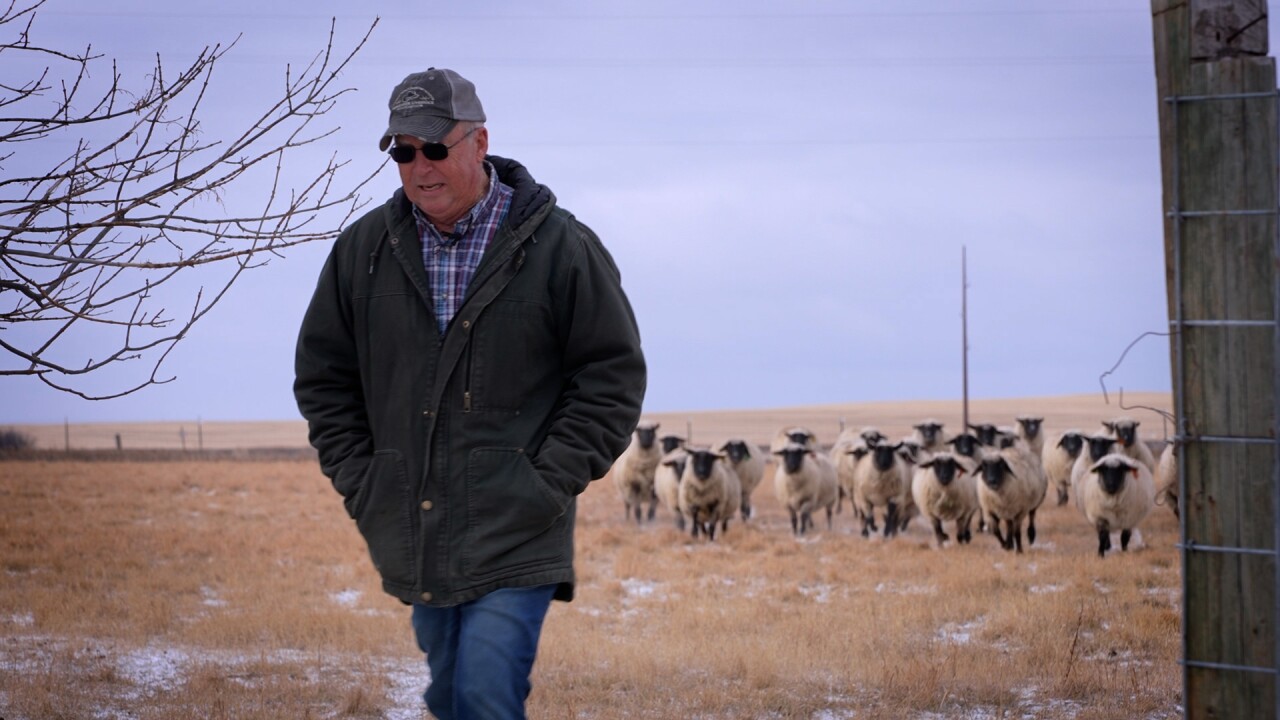
Mike Hoggan, who operates Belgian Hill Sheep in Valier, Montana, says the past year nearly pushed his operation out of business.
“This last year, we were on the verge of going out of the sheep business,” Hoggan said. “Four of the five producers that bought rams from us every year went out of the sheep business.”
Hoggan and his wife, Maureen, have spent more than three decades building their operation, focusing on genetics and selling breeding rams to producers across the region. He says the loss of longtime customers reflects a broader trend playing out across rural Montana.
The decline is measurable. According to agricultural records cited by Hoggan, sheep numbers in his region have fallen sharply over the past several decades.

“In 1992, there were over twenty-two thousand sheep in this area,” he said. “Today, that number is down to about six thousand.”
Brent Roeder, Montana State University’s sheep and wool extension specialist, says imported lamb accounts for the majority of what Americans consume.
“About seventy-five percent or more of the lamb Americans eat now comes from imported products,” Roeder said. “And that creates a challenge for domestic producers trying to compete.”
Roeder says the issue is not simply about foreign producers, but about how global markets and trade systems have evolved. Differences in currency value, particularly the strength of the U.S. dollar, combined with a highly consolidated global supply chain, can give foreign suppliers a significant pricing advantage.

“When you have a small number of multinational companies controlling trade, they’re able to leverage those currency differences,” Roeder said. “That can allow imported lamb to sell for less than U.S.-raised product, even when domestic producers are producing a high-quality product.”
Producers say the result is volatility in pricing and uncertainty that makes long-term planning difficult. Sheep production requires decisions to be made months or even years in advance, from breeding schedules to flock size and feed investments.
“When prices crash, it forces producers to delay investments or reduce flock size,” Roeder said. “And that has long-term consequences, especially when you’re trying to pass an operation on to the next generation.”
Despite the pressure, Roeder says that most producers support free trade in principle, but believe safeguards are necessary to ensure fair competition.
“Producers believe in free trade, but they also believe in fair trade,” he said. “The goal is staying profitable enough to turn these operations over to the next generation.”
Concerns from producers have increasingly reached the national level. On January 9th, 2026, Montana Senator Steve Daines led a letter to the U.S. Trade Representative urging a federal investigation into lamb imports under Section 201 of the Trade Act of 1974. In the letter, Daines stated that surging imports have harmed American sheep producers, who are already facing high input costs and labor shortages, and warned that without action, multi-generational sheep operations could be at risk.
For producers like Hoggan, the stakes are not abstract. He says decades of genetic improvement and careful management could be lost if operations are forced to shut down.
“We’ve spent more than thirty years building this genetics,” Hoggan said. “It would be a shame to lose that.”
Still, producers and experts point to signs of cautious optimism. Lamb prices have strengthened in recent months, and producers are exploring new ways to stay competitive, from improved genetics and data-driven management to direct marketing and value-added products.
Roeder says younger producers entering the industry are approaching challenges differently, looking for efficiencies and alternative markets that previous generations may not have had access to.
“They’re willing to try new production systems and new marketing models,” Roeder said. “That gives me hope for where the industry can go.”
For now, Montana’s sheep producers say the future of the industry may depend on whether policy decisions, market conditions, and consumer choices align in a way that allows domestic producers to compete and continue a way of life that has shaped rural communities for generations.
For a closer look at broader trends within agriculture, both nationwide and county-level information on specific commodities, check out the USDA's 2022 Census of Agriculture.
