


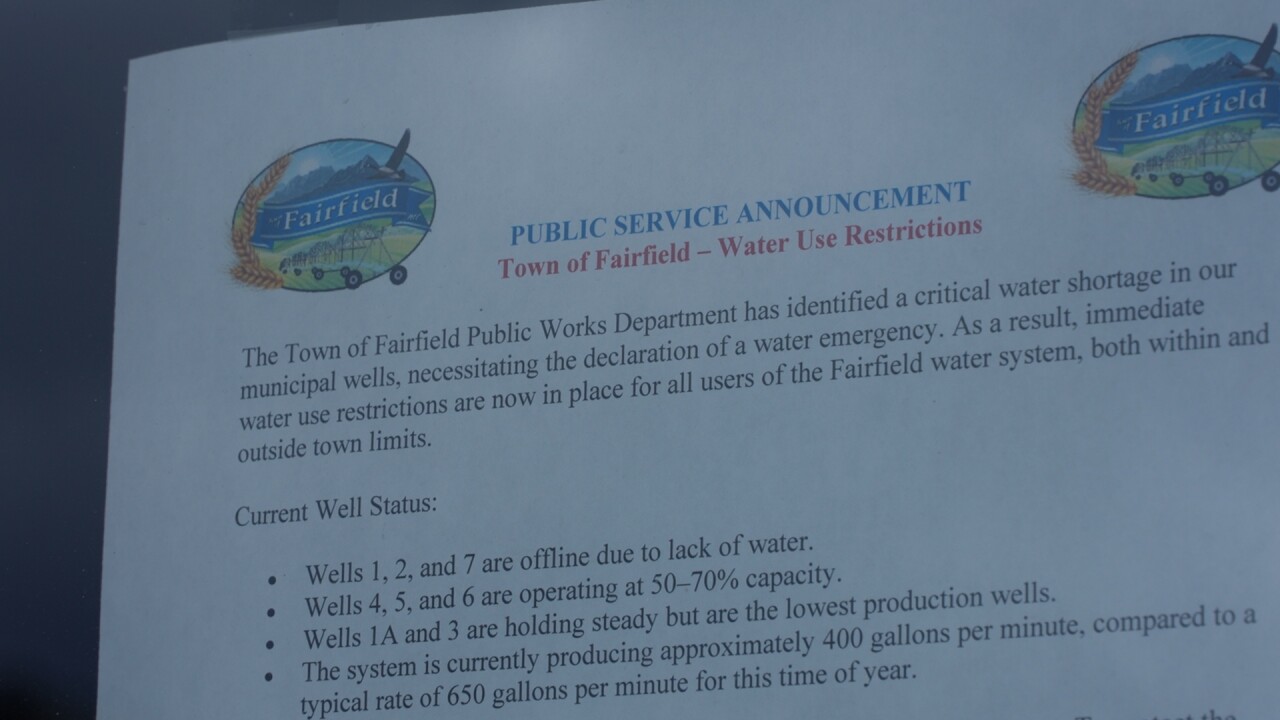
FAIRFIELD — Emergency water conservation measures are now in place at Fairfield Public Schools, as the town continues to deal with a worsening water shortage tied to declining well levels. The changes come after the city lost another well, further limiting an already strained water supply.
Madison Collier reports - watch the video here:
Fairfield Public Works Director Chuck Dale says the situation has reached a critical point.
According to Dale, the town has already brought in 14 portable restrooms to the school this week to reduce water usage, with more expected in the coming days. He says the city is also encouraging larger businesses to shift toward paper and plastic products to help conserve water.
Dale says the town is focused on finding short-term solutions while facing a much more challenging long-term reality.
Efforts to drill new wells have not provided relief, in some cases, Dale says crews have been unable to find water at all.
While the impacts are now clearly visible in schools and across the community, the root of the issue goes deeper… literally.
Much of the groundwater that supplies Fairfield comes from an aquifer beneath the Fairfield Bench, which is heavily dependent on irrigation water to recharge.
Tim Brunner, a rancher on the Fairfield Bench and on the board of commissioners with the Greenfields Irrigation District, says that connection has always been critical.
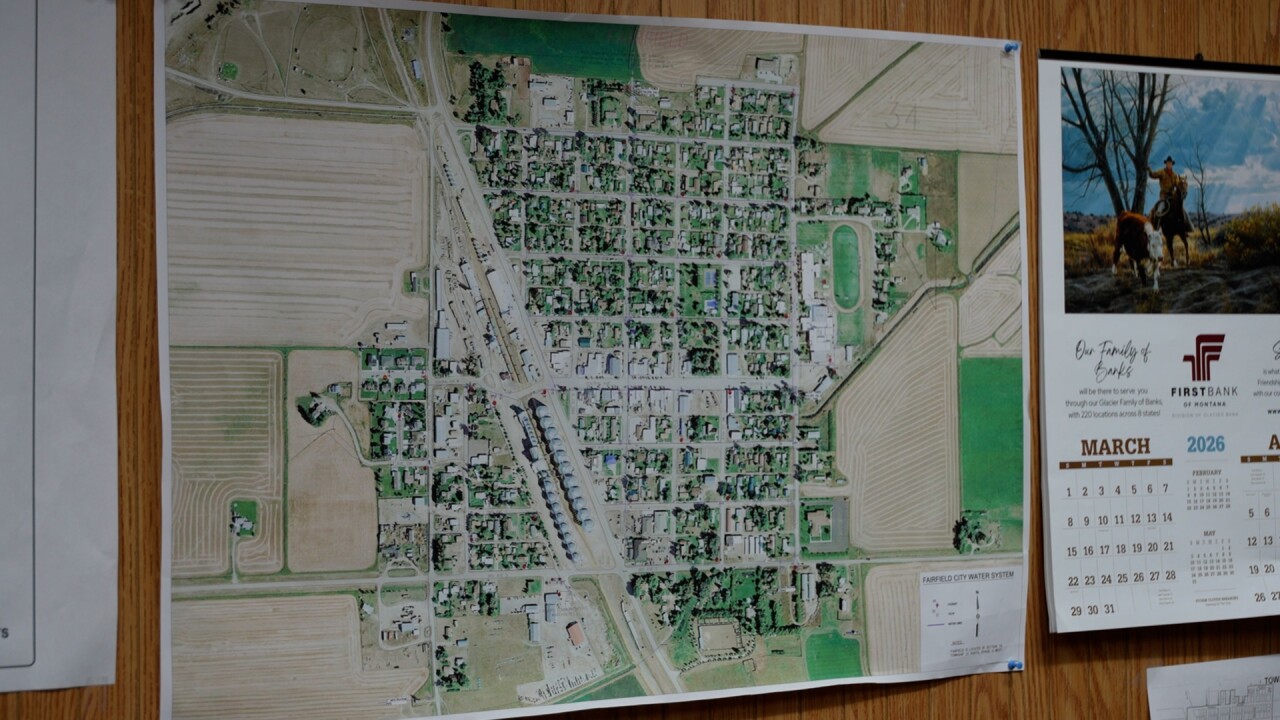
“Most of the wells on the Fairfield bench and in the town are dependent on canal water,” Brunner said. “When that water comes down for irrigation, it soaks into the ground and helps recharge the water table.”
But changes in how water is used, and how much is available, are beginning to impact that system.
“When you flood irrigate, the water soaks deep into the ground… sometimes 10 or 12 feet,” Brunner said. “But with pivots, you’re putting on smaller amounts over time, and it’s just not able to go as deep.”
Research supports that relationship between irrigation and groundwater.
A study released in 2025, as part of a larger and ongoing project, by the Montana Bureau of Mines and Geology found that the aquifer beneath the Fairfield Bench relies heavily on irrigation water and canal leakage to replenish groundwater supplies. It also notes that shorter irrigation seasons… driven by lower snowpack and reduced water availability… can lead to declining groundwater levels.
The Fairfield School District says it is working closely with city officials as conditions continue to evolve.
In a statement to MTN, Dustin Gordon, the Superintendent of Fairfiled Public Schools, said it has implemented its Emergency Water Use Plan to conserve water while maintaining a safe learning environment for students and staff.
The plan includes the use of portable restrooms, limited indoor restroom usage, a transition to disposable food service items to reduce dishwashing, and increased access to waterless sanitation supplies. Additionally, students and staff are encouraged to bring reusable water bottles.
Gordon says they are focused on minimizing disruption to learning while supporting broader conservation efforts.
The Fairfield School District is actively responding to the City of Fairfield’s ongoing water supply challenges, which have been further impacted by the recent loss of an additional well. In coordination with city officials, the district is implementing its Emergency Water Use Plan to help conserve water while maintaining a safe and functional learning environment for students and staff.
This plan includes the use of portable restrooms to reduce water demand, limited indoor restroom usage, a transition to disposable food service items to minimize dishwashing, and increased availability of waterless sanitation supplies. Hydration stations will remain available, and students and staff are encouraged to bring reusable water bottles.
We are committed to working closely with the City of Fairfield and other partners to support community-wide conservation efforts while minimizing disruption to student learning. While this situation presents challenges, we are confident in our planning and our staff’s ability to adapt and continue providing quality education.
The district added it will continue to monitor the situation and provide updates as needed.
Dale says Fairfield is not the only community experiencing these challenges, noting that surrounding areas are also beginning to see the impacts of declining water supplies.
For now, Brunner explained adaptation is key… both in how water is used today and how it may be managed in the future.
