


GREAT FALLS — The U.S. Air Force is wrapping up a series of town halls across north-central Montana, giving community members a chance to ask questions and learn more about the Sentinel missile modernization project.
Meetings held in Lewistown, Conrad, and Great Falls brought together residents, civic leaders, and Air Force officials to discuss how the project could impact communities across the region.
Madison Collier reports - watch the video here:
They say the goal of the town halls is not only to provide updates, but to gather input from the people who will be most affected.
“We really, really need the community support side,” said Lt. Col. John Mayer, commander of the Sentinel Task Force Detachment 11 at Malmstrom Air Force Base. “This would not be possible to achieve successfully, on time, on budget, without the help of the community.”
While questions varied at each stop, several common themes emerged during the Q&A sessions, particularly around infrastructure and long-term planning.
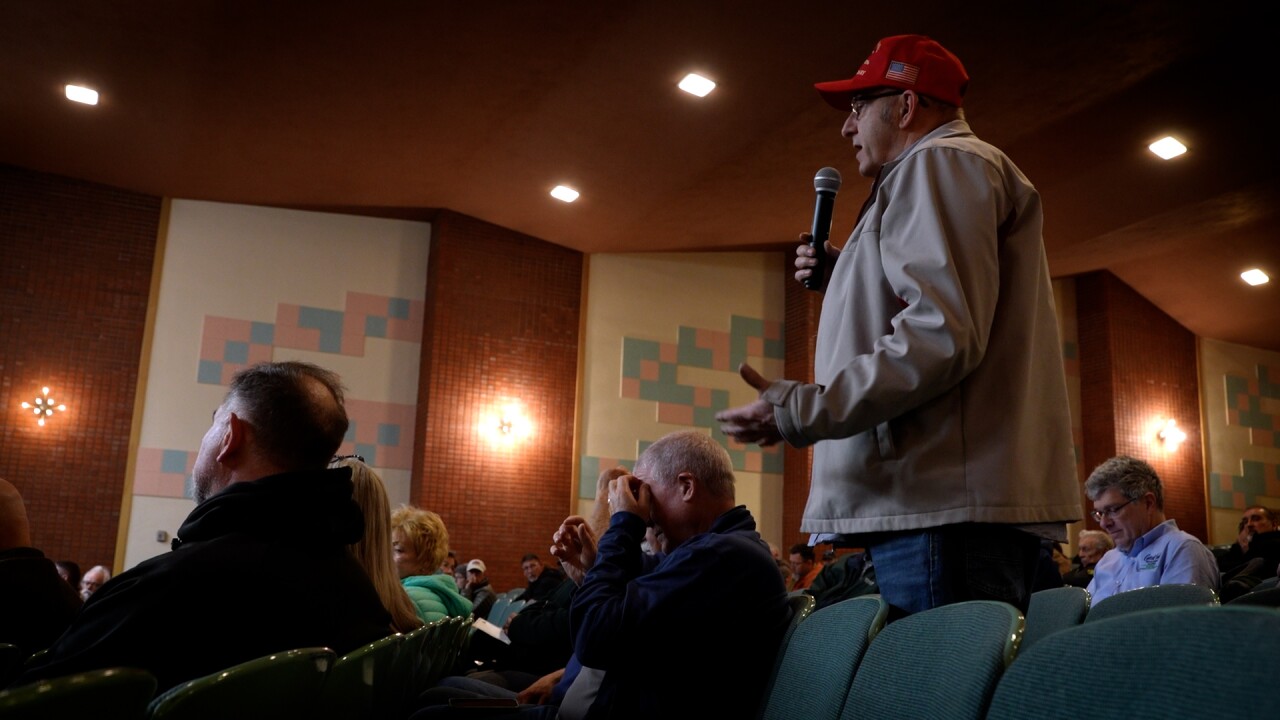
During the April 2nd meeting at West Elementary School in Great Falls, Residents raised concerns about how an influx of workers could impact housing, roads, water systems, and municipal services.
“What are your goals for helping us out in that aspect, adding extra housing and so forth?” one attendee asked during a town hall.
Air Force representatives acknowledged those concerns, noting that workforce hub placement and community impacts are still being evaluated.
“The burden on the infrastructure, the burden on schools and other community-type features that are required to sustain a population like that,” said Peter Sturdivant, the director of Intercontinental Ballistic Missile Infrastructure for the Air Force Nuclear Weapons Center. “That’s something we’re going to have to balance as we look at the concept of setting up these workforce hubs.”
Mayer said those types of questions are expected.
“Folks very understandably are interested in how this is going to impact them… where are all the workers going to be housed,” Mayer explained.
Beyond infrastructure, many attendees asked about how land will be used and what steps will be taken before construction begins.
That includes cultural and environmental surveys, as well as how the Air Force plans to work with landowners.
Officials emphasized that agreements and negotiations will be part of the process moving forward.
“We will do everything we can to come to an agreement with the landowners,” said Col. James Rodriguez, the Sentinel materiel leader-lower, launch systems at Hill AFB.
Including a utility corridor pilot project to first test procedures on a small scale and identify more efficient methods for both the Air Force and landowners as utility work begins to ramp up.

Some questions focused on the bigger picture… including how command structure, silo placement, and even changes at the federal level could affect the project’s future.
Attendees also raised concerns about transportation and logistical challenges tied to construction.
Air Force leaders say these types of concerns are critical to the planning process, especially as the project moves forward across a large and largely rural area.
And while this round of meetings is coming to a close, leaders say the conversation is far from over.
“People don’t need to wait until the next town hall to follow up or to ask for information,” Mayer said. “We want that information out in the community as much as we can so that we partner well together.”
As the project continues to advance, leaders with the Sentinel project are preparing a Supplemental Environmental Impact Statement. For more information, documents, timelines, and comment period updates, check here.
Sentinel email is AFGSC.Sentinel.Hotline@us.af.mil and the Malmstrom Sentinel hotline is 406-731-2427.
