


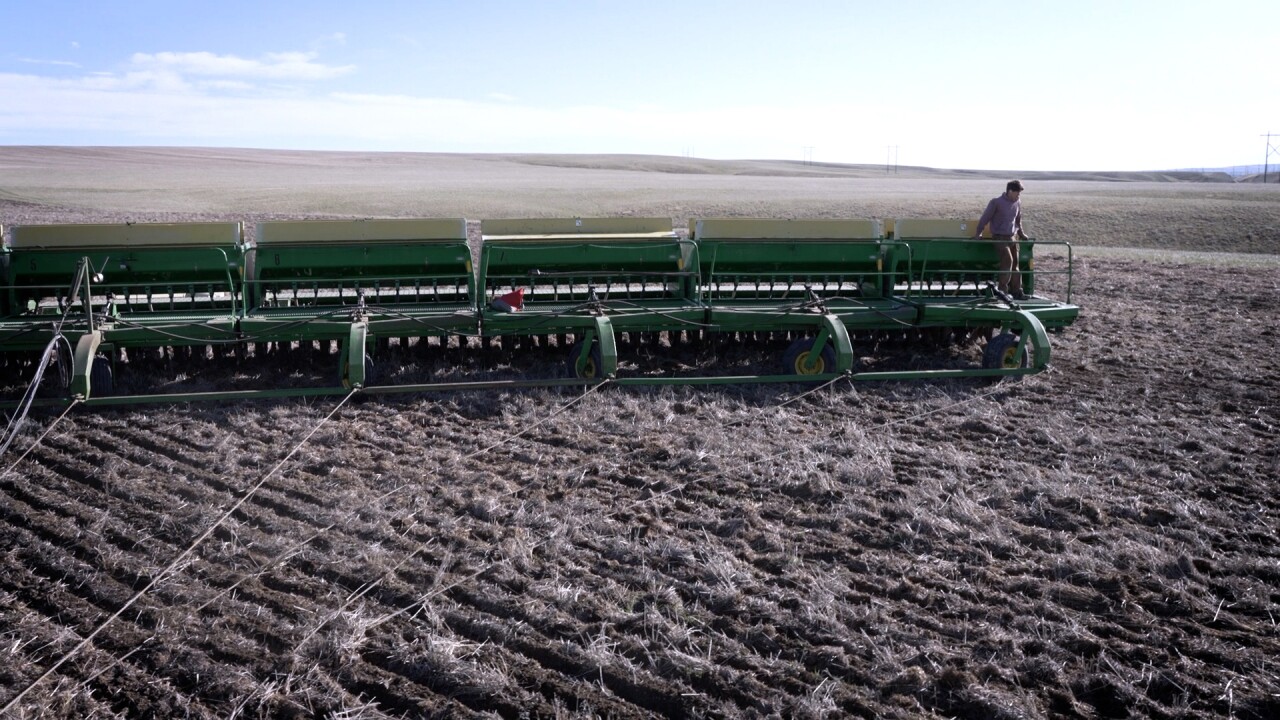
NORTH CENTRAL MONTANA — It’s spring in Montana, and for many producers, that means getting seed in the ground and fertilizer on the fields their livelihoods depend on. But this year, the cost of fertilizer is cutting into that process… and potential profits.
Since late February, urea prices have jumped by a little more than 50%. Industry leaders say the increase is adding pressure during one of the most important times of year for agriculture.
Madison Collier reports - watch the video here:
Walter Schweitzer, president of Montana Farmers Union, said fertilizer is available, but affordability is the issue.
“It’s available, but the price has gone way up,” Schweitzer said. “Our local dealers kind of held the price on their existing inventory to start with, but as they’ve had to restock, the prices have gone up considerably. And so farmers are kind of getting squeezed.”
He added that producers who did not pre-order or pre-buy fertilizer are now facing much higher prices.
“If you didn’t pre-order, pre-buy your fertilizer, you’re paying 30%, 40%, maybe as much as 50% more for that fertilizer,” Schweitzer said. “And so it’s a tough choice farmers are making, but I would say most of them are cutting back on how much they use.”
The price pressure comes as fertilizer has become a national focus, with the United States Department of Agriculture and other federal agencies outlining efforts to lower costs, expand domestic production and ease supply chain constraints.
Governor Greg Gianforte’s office said the state has also taken action.
In a statement to MTN, the governor’s office said:
Governor Gianforte has been a strong supporter of Montana’s farmers and ranchers and recognizes the growing concerns around fertilizer availability. On April 17, Governor Gianforte signed an executive order [gov.mt.gov] providing temporary exemptions for certain carriers from hours-of-service regulations under Montana law. This action is intended to help meet fertilizer delivery demands and ease pressure on producers across the state.
Tanner Hoversland, president of the Montana Agricultural Business Association and an agronomy manager for Moore Farmers Oil, said the governor’s order helps with logistics by allowing fertilizer to move more quickly.
“The governor has reduced or suspended hours of service for truck driving, which helps us move product from point A to point B a lot quicker and timelier,” Hoversland said. “So that helps that constraint as well.”
Hoversland explained the current fertilizer situation is being driven by several factors, including the war with Iran, the closing of the Strait of Hormuz, reduced exports from China, and reduced domestic production.
“We put a big constraint on the world market right now because of multiple factors, but the war being the biggest one,” Hoversland said.
For Montana producers, Hoversland said availability has generally been manageable because many retailers contracted for fertilizer needs in the fall. But producers buying now are facing the highest costs.
“Availability has been good,” Hoversland said. “Most retailers like ourselves, we contract all that stuff for a lot of our needs in the fall. So really the biggest part for the growers is the biggest disruption is just price.”
Hoversland said several of the solutions being discussed at the federal level could help, but most are not immediate fixes.
“There’s lots of things that are happening, both short-term and long-term,” Hoversland said. “So we’ll just have to see how it all kind of plays out.”
One possible short-term impact, he said, is keeping more fertilizer product in the United States instead of exporting it at a higher price.
“The U.S. is trading at a discount to the rest of the world on most fertilizers, but most of that product is staying domestically, which is helping out with the supply side of things,” Hoversland said. “So these companies aren’t taking their product and sending it over to Brazil, let’s say, and receiving $150 more per ton. They’re keeping it in the U.S., and that’s helping ease that supply constraint.”
Other possible solutions include reducing permitting times for domestic production facilities, changes tied to diesel exhaust fluid rules that could free up urea supply, bridge payments to growers, potential additional disaster relief payments and possible changes to countervailing duties on Moroccan phosphate.
But even with those efforts, Hoversland said most relief will take time.
“I think that those are going to have very minimal short-term effects on us in this growing season,” Hoversland said. “These policies aren’t necessarily going to be short-term fixes, but they’re medium-term fixes that could really help give us relief in two to five years.”

He said increasing domestic fertilizer production is one example of why the timeline is longer.
“That takes time to secure permits, build buildings, get the whole infrastructure in place for that,” Hoversland said. “So that can’t be a short-term fix, but we do need those things.”
While nitrogen and urea have received much of the attention, Hoversland said phosphate is one of his biggest concerns moving forward, especially as producers look toward winter wheat in the fall.
“I think nitrogen will kind of settle itself out,” Hoversland said. “But phosphate’s the biggest one I think that I’m worried about.”
He said one longer-term solution is the use of agricultural technology, including more precise fertilizer application.
“We’re looking at more ag technology, more variable rate, like putting the fertilizer, the right amount of fertilizer, the right source and the right place where it needs to be when it needs to be there,” Hoversland said.
Schweitzer said from the Montana Farmers Union’s perspective, the current actions are not helping producers quickly enough.
“There’s been a lot of talking about talking about,” Schweitzer said. “I would say that the leaders are acknowledging there’s an issue, but they haven’t done anything to address the issue. And so there’s been a lot of innuendos and promises and ‘we’re going to do something about it,’ but there’s nothing concrete, nothing in writing, no definitive plans to fix the problem.”

Schweitzer said the pressure is building on other challenges producers were already facing, including input costs and low commodity prices.
“These are my neighbors, my friends that are losing their farm because of the cost of inputs and the loss of markets,” Schweitzer said. “And it also adds a lot of stress to it.”
Hoversland says the solution will require coordination across the industry, universities, state agencies and the federal government.
“I think it’s a multi-layered approach,” Hoversland said. “We really want everybody in the industry, that being from manufacturing to the universities and everybody in between, the government, everybody to be involved in this because there are lots of ways to solve this both short-term and long-term.”
On April 28th United States Secretary of Agriculture, Brook Rollins, held a press conference recapping the Trump administration's efforts to lower fertilizer prices to date.
