

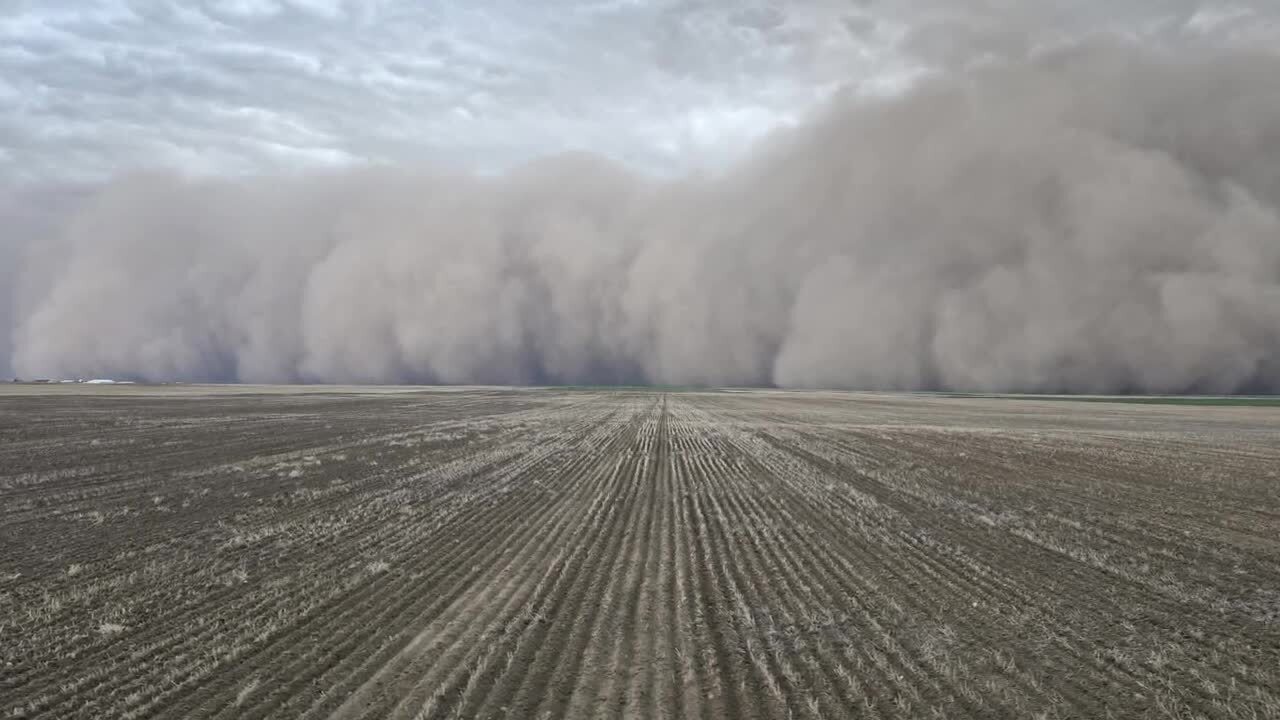

BILLINGS — A massive dust storm swept through part of north-central and northeastern Montana last week, closing highways, canceling schools, and damaging structures, and experts warn events like this could escalate into conditions similar to the Dust Bowl era.
High winds whipped dirt into a towering plume, limiting visibility across the Hi-Line. While the storm caused some property damage, the biggest long-term concern is what it did to farm and ranch land.
Charlie Klepps reports - watch the video here:
Victoria Bauer, a Scobey resident, said the storm was unlike anything she had seen before.
"It was pretty intense. We normally don't get those types of winds here," Bauer said in an online web call Wednesday morning. "I've seen pretty scary rainstorms and blizzards, but nothing like this."
Havre resident and farmer Michael Compton described the eerie feeling of watching the storm roll in.
"You could just see the dust starting to build up," Compton said in an online web call Wednesday afternoon. "It was almost like it was dusk going into night, it got so dark with the dust hit. I've never experienced anything like that."
Compton said the event was caused in large part by a prolonged drought.
"It's just been a really bad drought," Compton said. "I mean we've had a bad drought the last couple of years, and we didn't have much for a winter."
Compton said that when the winds pick up with extreme dry conditions, there isn't much people can do.
"It's kind of just Mother Nature," Compton said. "You can only do so much."
Massachusetts geoscientist Isaac Larsen, one of the country's leading experts on soil loss, said conditions like those in Montana are part of a broader and worsening pattern.
"Storms are more severe, droughts are more severe," Larsen said. "It's a combination of things are dry, you don't have a lot of growth and you have these high wind events, they can move a lot of soil around."
Larsen said it's a situation that's growing more concerning across the country. His research shows more than a third of the Corn Belt, roughly 30 million acres, has lost its nutrient-rich topsoil.
Larsen points to wind, a warming climate and industrial-scale farming practices like overtilling as compounding the problem.
"It's like a bank account," Larsen said. "If you keep withdrawing without putting money back in, essentially you'll go down to zero at some point."
Larsen warned that if the trend continues, the U.S. could face conditions similar to the Dust Bowl of the 1930s.
"I think it's not inconceivable that we could have another Dust Bowl-type event happen in the US," Larsen said.
